Her classroom
For teachers, librarians and book clubs.
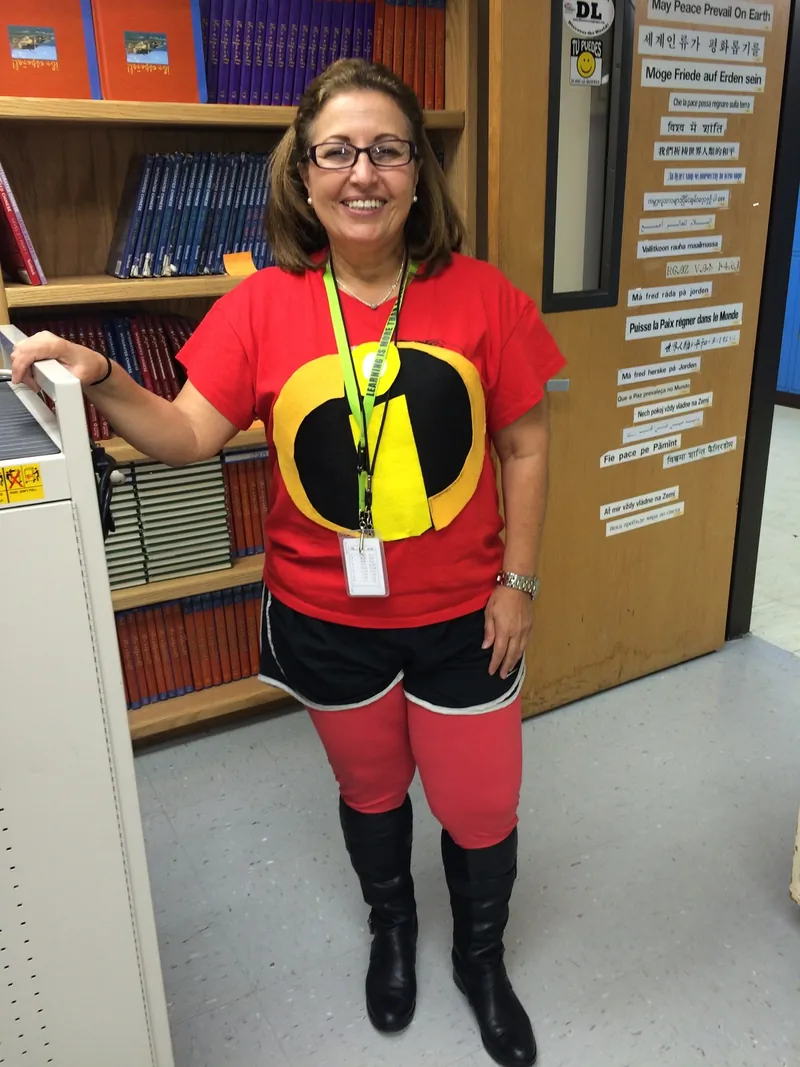
Maritza Iberico taught Spanish in New York: at Ryan Junior High School in Queens, at Herricks High School on Long Island and in the Spanish literature department at Queens College.
How the book teaches
Her book reads like a teacher’s case. She defines her terms, numbers her points, quotes her sources and sums up. Much of it is built from Donald Trump’s own words and tweets, set beside her commentary.
The fable at its center
She opens the book with Hans Christian Andersen’s The Emperor’s New Clothes.
It is a tale of an entire kingdom that ignores the obvious for fear of judgment, only to be called out by a child.
Then she asks who will play the child.
A child that when he sees a lie, calls it out.
A senator in 1950
Near the end she turns to Margaret Chase Smith of Maine, a Republican senator who on June 1, 1950, gave her “Declaration of Conscience” against the tactics of Senator Joseph McCarthy, a member of her own party. Maritza reprints the whole speech.
Read the speech on the U.S. Senate’s website (PDF)Questions for discussion
- Her preface asks who will be the child who calls out the lie. Who plays that part today, and what does it cost them?
- She wrote in 2018 and 2019. Read the She saw it coming page. Which of her warnings and hopes came true, and which did not?
- She lived under military governments in Peru and under Franco in Spain. How does that shape the way she reads American politics?
- Much of the book is built from Trump’s own words and tweets. What does that method show clearly? What can it miss?
- She calls herself “your regular citizen.” What does the book ask of ordinary citizens?
- Why does she turn, near the end, to Margaret Chase Smith’s 1950 speech? What does a senator who stood up to a member of her own party teach today?
- The book exists in English and in Spanish. Read one passage in both languages. What changes?
- She published the book in January 2020 and died that April. Does knowing that change how you read it?
Copies for a class, library or book club
Both editions, with their ISBNs, are listed on the book page.
The book